Social Media Is Now a Strategic Asset
Why Social Media Is Now a Strategic Asset, Not a Marketing Channel
For years, social media was treated as a distribution layer — a place to push content, run ads, and measure vanity metrics. That era is over.
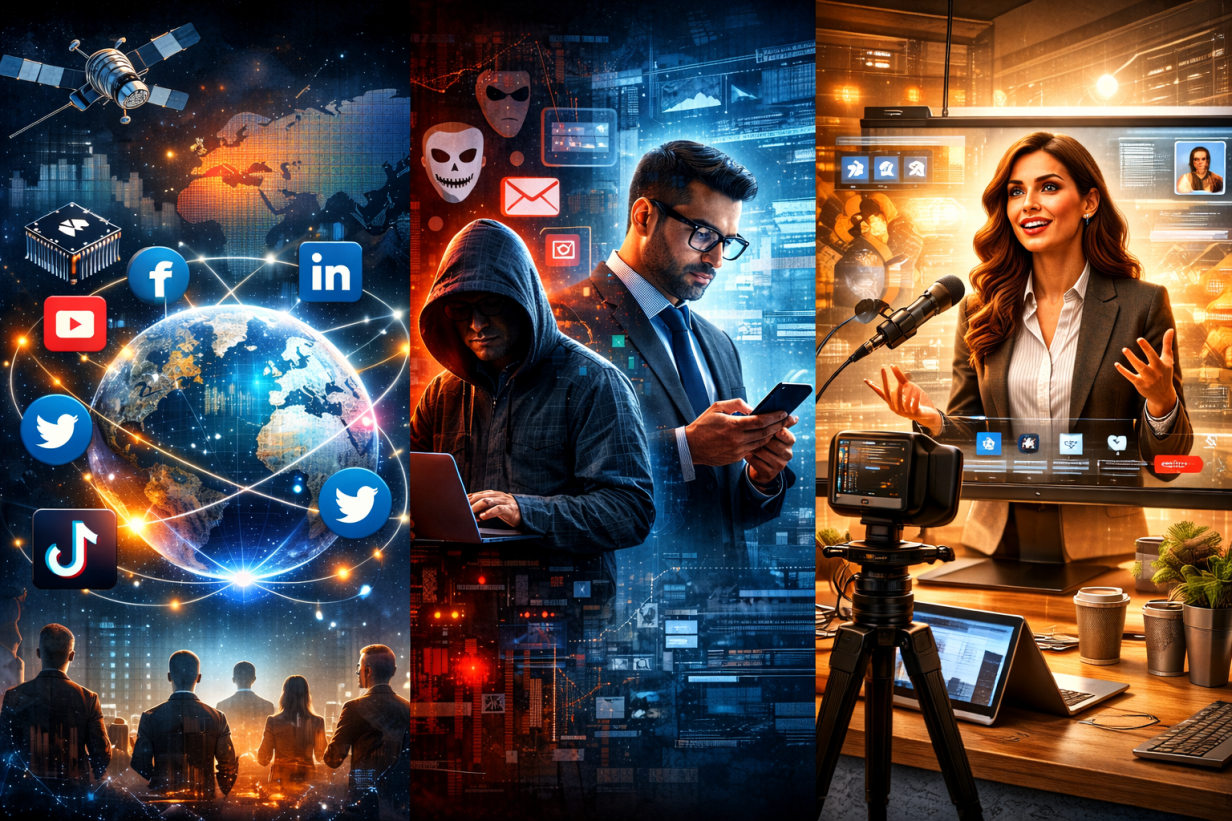
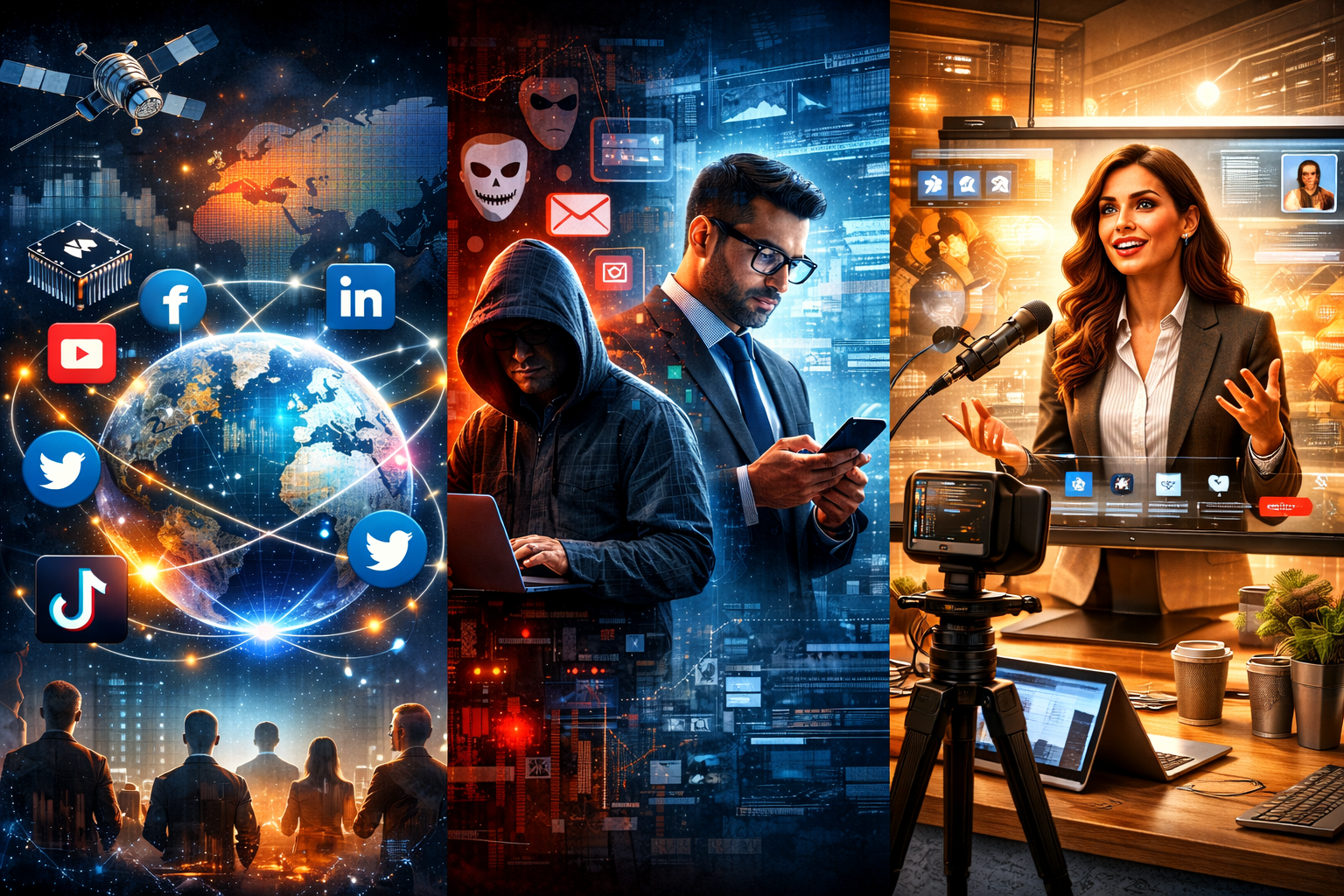
Today, social media is infrastructure. It shapes public opinion, drives capital flows, influences elections, impacts stock prices, and determines which technologies win and which disappear. If you work in cyber security, AI, finance, defence, healthcare, or government, you are already operating inside an influence economy, whether you realise it or not.
The question is no longer “Should we be on social media?”
The question is: “Do we understand how power moves across networks?”
The Shift from Audience to Influence
In the old media model, power was centralised. Gatekeepers controlled access. Editors decided who was heard. Brands paid for attention.
Now, influence is distributed.
A single founder with clarity of thought and a disciplined content strategy can shape industry narratives faster than a multinational corporation. A security researcher can publish a thread and force a vendor to respond within hours. An AI developer can demonstrate a model’s capability and move markets before analysts even write their reports.
We are watching decentralised media in real time.
Influence today is built on:
-
Speed of insight
-
Credibility of signal
-
Consistency of output
-
Network amplification
It is not built on follower counts alone. It is built on trust.
The Cyber Security Dimension
From a cyber perspective, social media is both an attack surface and a strategic opportunity.
Threat actors understand narrative warfare. Disinformation campaigns, impersonation accounts, synthetic media, and coordinated bot amplification are now standard tools. Deepfakes are improving. AI-generated personas are harder to detect. Social engineering has evolved beyond email — it now operates at scale across LinkedIn, X, Instagram, and emerging platforms.
If you are not actively managing your digital identity, someone else eventually will.
At the same time, social media is the fastest channel for threat intelligence. Zero-day chatter, vulnerability disclosures, exploit proofs, ransomware negotiations — they surface socially before they hit formal advisories.
The modern CISO cannot ignore this layer.
AI Has Changed the Content Equation
Generative AI has reduced the friction to create content. Anyone can publish articles, generate visuals, produce short-form video, or simulate expert commentary.
This creates two simultaneous realities:
-
There is more noise than ever.
-
Authentic human signal is more valuable than ever.
The winners in this environment are not those who publish the most — but those who think clearly and communicate original perspective.
AI can assist production. It cannot manufacture lived experience, strategic pattern recognition, or earned credibility.
As someone who operates at the intersection of AI and cyber security, I see this daily. The people who stand out are those who interpret change — not just repeat headlines.
The Rise of the Domain Influencer
The new influencer is not necessarily a lifestyle creator.
Increasingly, the most powerful voices are domain specialists:
-
Cyber security practitioners
-
AI engineers
-
Cloud architects
-
Risk and governance leaders
-
Defence analysts
-
Health data experts
They build followings not through spectacle, but through insight.
This is the professionalisation of influence.
In the coming years, your digital footprint will matter as much as your CV. Boards will review it. Investors will review it. Customers will review it. Regulators may review it.
Social presence is no longer optional reputation management — it is strategic positioning.
Why Businesses Must Think Like Media Companies
Every organisation is now a media entity.
If you are not telling your story, your competitors will define it for you. If you do not explain your technology, others will misinterpret it. If you are not humanising your brand, you will be reduced to a logo.
The companies that will dominate the next decade are those that:
-
Communicate clearly and consistently
-
Educate their market
-
Share thought leadership rooted in real expertise
-
Engage directly with their audience
Silence is not neutrality. Silence is invisibility.
The Strategic Imperative
Social media is no longer about trends. It is about positioning.
In a world driven by AI acceleration, cyber risk escalation, and geopolitical uncertainty, narrative control matters. Trust matters. Visibility matters.
The professionals and companies who understand this early will compound influence over time.
The ones who ignore it will eventually wonder why they were not invited into the conversation.
The influence economy is here. The question is whether you intend to participate — or observe from the sidelines.
